


Ceiling Fan Installation and Upgrades: Staying Comfortable Through a Phoenix Summer
A good ceiling fan makes a room feel cooler and takes load off the air conditioner through a long desert summer. Here is how sizing, mounting, and proper wiring decide whether a fan actually helps or just hangs there.
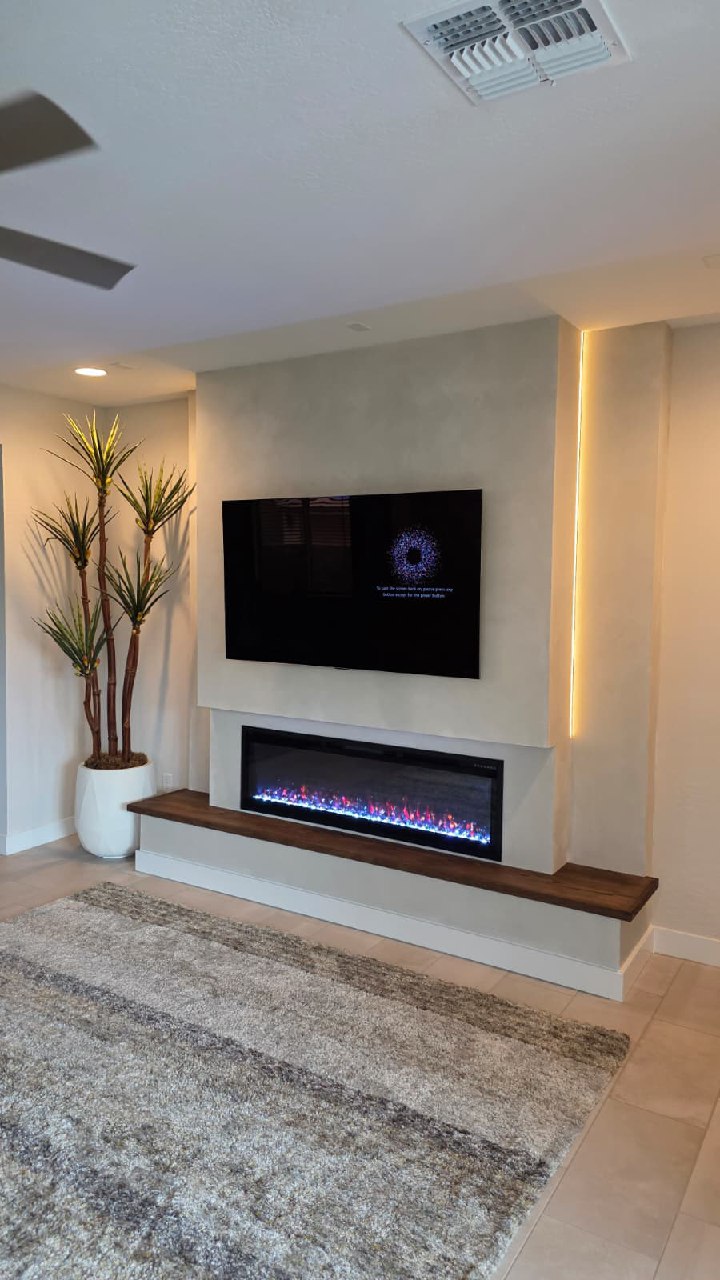
In a Phoenix summer, the air conditioner does the heavy lifting, but a well-chosen ceiling fan is the quiet partner that makes a room feel several degrees cooler without touching the thermostat. A fan does not lower the air temperature; it moves air across skin, and that moving air makes a room feel noticeably cooler, which lets a household nudge the thermostat up a bit and take some load off an AC system that runs for months straight here. That comfort is real, but it only shows up when the fan is the right size for the room, mounted at the right height, and wired correctly. A fan that is undersized, hung too low, or wobbling on a weak box does little more than spin, which is why the install matters as much as the fan itself.
Sizing is the first thing to get right, because a fan that is too small for the room simply cannot move enough air to be felt. Fan size is measured by blade span, and the guideline ties that span to the square footage of the room — a small bedroom or office wants a compact fan, while a great room or a large primary bedroom needs a substantially larger one, sometimes more than a single fan for a long open space. Under-sizing is the most common mistake, leaving a big Phoenix living room with a fan that stirs the air near the ceiling but never reaches the people below. Matching the blade span to the room is the difference between a fan you feel and a fan you merely see turning.
Height and clearance decide both safety and effectiveness, and they are set by the ceiling. The blades need to hang low enough to move air where people actually are, generally leaving comfortable clearance above head height, but high enough that no one walks into them — which makes a downrod the right call on the tall and vaulted ceilings common in Phoenix homes, and a flush or hugger mount the answer on a standard eight-foot ceiling. Sloped and vaulted ceilings need the correct downrod length and often a special mount to hang the fan level, and blades should keep a healthy distance from walls and sloped surfaces so the airflow is not choked. Getting the height and clearance right is what lets the fan cool the room instead of just decorating the ceiling.
Mounting is the part that cannot be improvised, because a ceiling fan is heavy and it spins. A fan must hang from an electrical box rated and listed specifically for ceiling fan support, secured to solid framing — a standard light fixture box is not built to carry the weight and the constant motion, and a fan hung from one is a wobble and a hazard waiting to happen. Replacing an existing light with a fan therefore often means installing a proper fan-rated brace and box first, not just reusing what is there. That upgrade is invisible in the finished room and is exactly what keeps a fan running smooth and quiet for years instead of rattling loose overhead.
Wiring and controls are where a fan becomes convenient rather than merely functional. A fan with a light needs the switching sorted out — separate control of the fan speed and the light is far more useful than a single switch running both, and adding that may mean running the right wiring in the wall. Modern fans bring remote and wall controls, and many now include a reversing switch that is worth using: running the blades one direction pushes cooling air down in summer, while reversing them in the cooler months gently circulates warm air. All of this is electrical work that has to be done to code and grounded correctly, which is the line between a fan a homeowner can safely enjoy and one that becomes a problem. Done right, the controls make the fan something the family actually reaches for every day.
Home Harmony installs and upgrades ceiling fans throughout Phoenix — sizing the fan to the room, setting the correct downrod and height for standard, vaulted, or sloped ceilings, installing a fan-rated box and brace, and handling the wiring and controls to code. A consultation can look at the rooms that run hottest through a Phoenix summer, recommend the right fans and placement, and get them mounted so the house feels cooler while the air conditioner works a little less.
Need a free estimate?
Home Harmony LLC helps Arizona homeowners with painting, repairs, cabinet upgrades, pressure washing, deck and fence work, and practical home improvements.